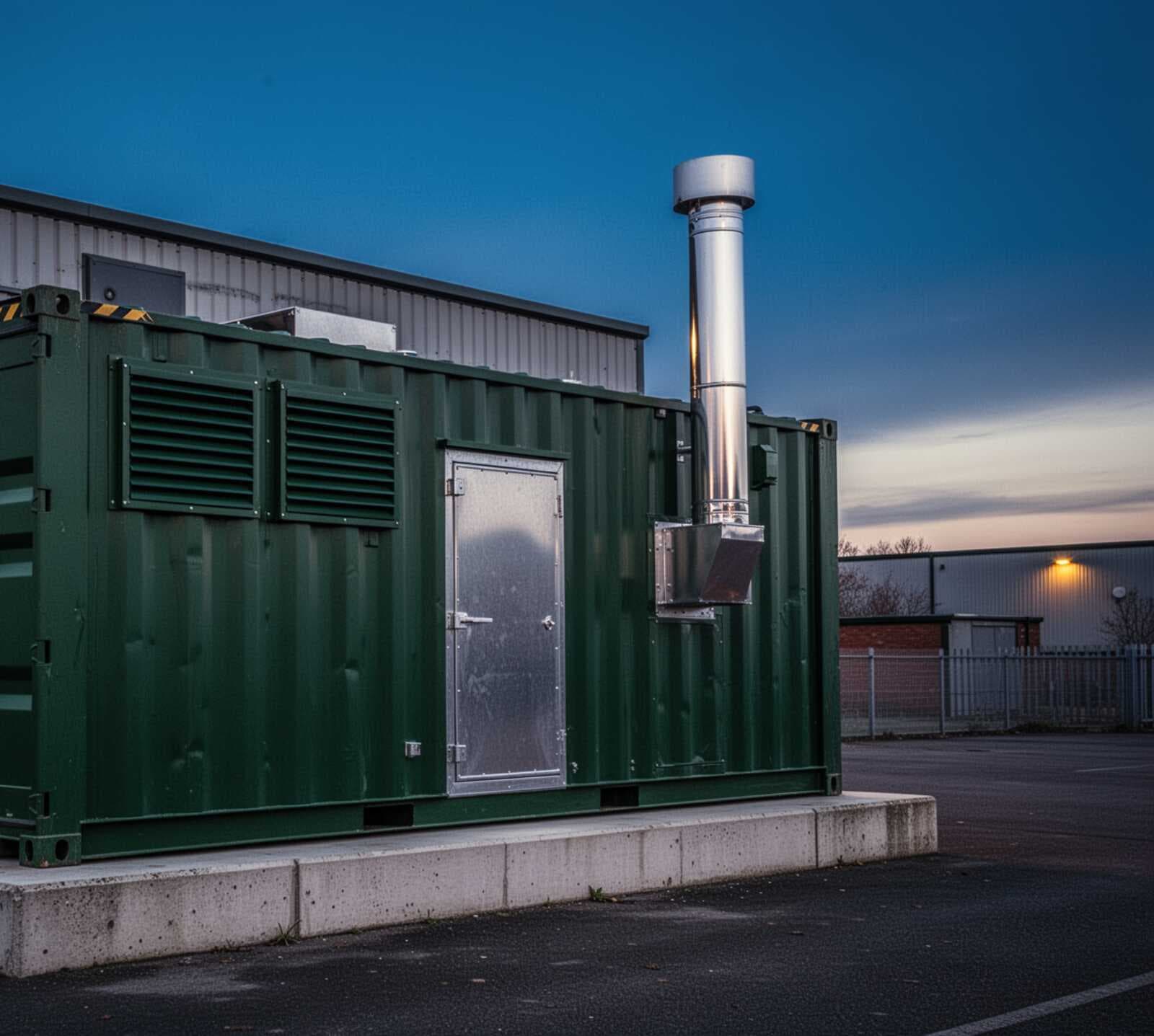

Hydrogen-ready CHP
Hydrogen-ready CHP
Funded, built and operated by Saber. No capex.
Hydrogen-ready CHP is gas engine generation that produces electricity on site and recovers the heat that a grid power station throws away, reaching up to 96 per cent total efficiency.
Hydrogen-ready CHP
What is hydrogen-ready CHP and when does it pay?
Hydrogen-ready CHP is gas engine generation that produces electricity on site and recovers the heat that a grid power station throws away, reaching up to 96 per cent total efficiency. Combined heat and power burns gas in an engine to generate electricity on site, then captures the heat that a conventional power station discards and puts it into the process, the heating loop or hot water. Using both outputs is what takes total efficiency as high as 96 per cent. Hydrogen-ready means the engine runs on natural gas today and can burn hydrogen blends as supply arrives, without being replaced. CHP pays where a site runs a consistent electrical load alongside real heat demand, so the recovered heat displaces boiler fuel rather than going to waste. It is firm generation, so it carries the evening and winter load that solar cannot reach.
Up to 96%
Total efficiency
Indicative. Electricity plus recovered heat, against roughly 40% from the grid
GBP 8 to 11
Cost per MWh, illustrative
Typical UK CHP maintenance and service cost band, before fuel
20%
Hydrogen blend ready
By volume, cutting gas-input carbon by roughly 6 to 7%
Where this fits
One technology is rarely the answer on its own.
Saber sizes the blend to the site’s demand profile rather than to whichever technology is easiest to sell. These are the combinations this technology usually earns its place in.
Commercial questions
What buyers ask about Hydrogen-ready CHP.
Direct answers, with the assumptions stated rather than buried.

Send us your half-hourly data and we will model it.
Twelve months of import data and a site pack is enough for an indicative blend, output range and unit rate, usually returned within one to two weeks and subject to feasibility.